
Insights from Future Food-Tech London 2026 highlight the challenges and opportunities shaping the future of food biotechnology – and the role of European collaboration in helping SMEs move forward.
The food biotechnology sector is entering a new phase. While scientific progress continues to open up exciting possibilities, the key challenges are increasingly shifting towards industrial scale-up, regulatory approval, access to finance and market adoption.
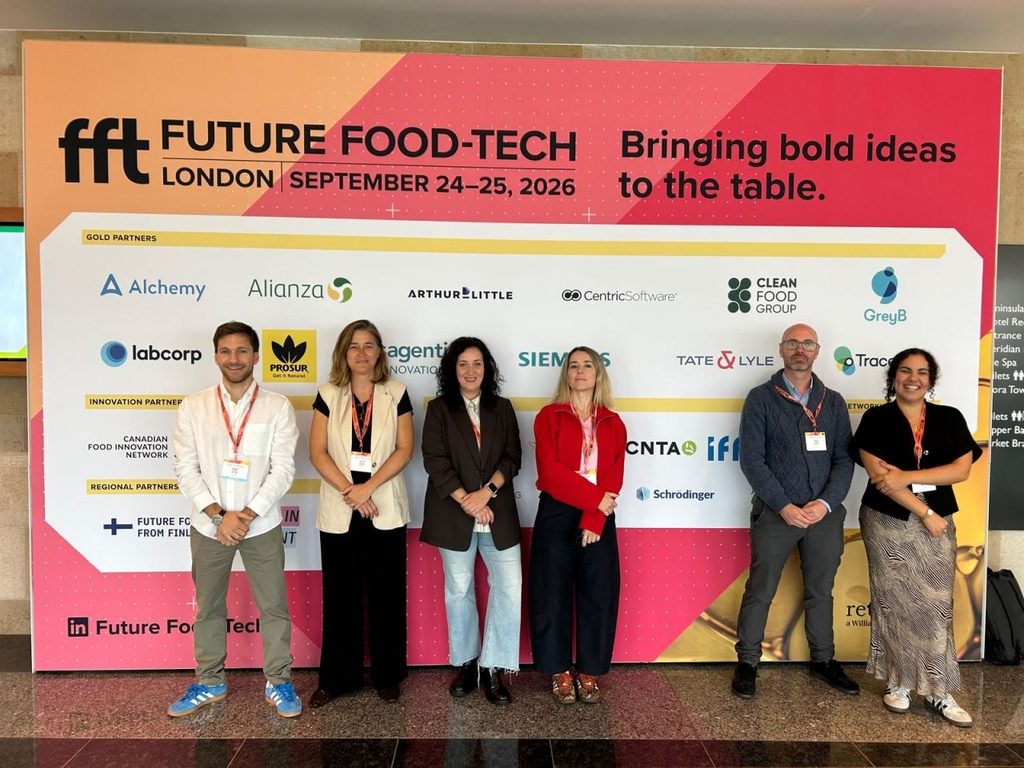
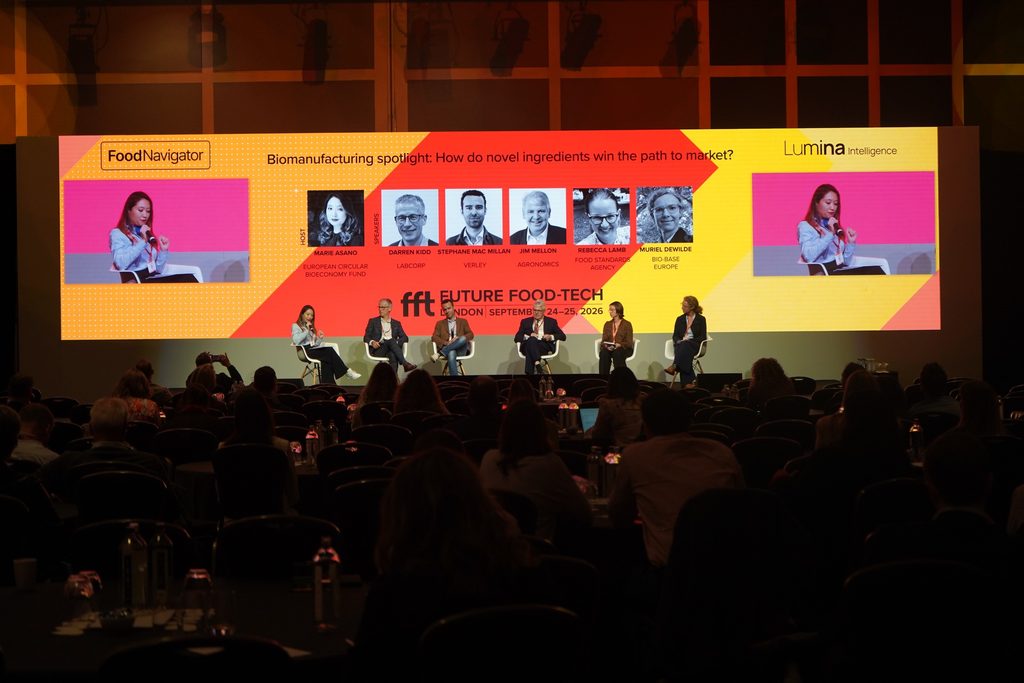
These were some of the key takeaways from Future Food-Tech London 2026, held on 24–25 September at the InterContinental London – The O2. Drawing on the event, the Technology Watch and Competitive Intelligence team at CNTA, a Biotech4Food project partner, published a report examining the latest developments and signals shaping the food-tech landscape.
Its findings highlight a central question for the sector: how can promising biotechnological solutions become viable, competitive and scalable ingredients, products and processes?
From technological potential to market demand
One of the strongest messages emerging from the event is that technology is no longer the only – or even the main – barrier to progress. The challenge is now to identify where biotechnology can deliver tangible value and meet a clearly identified market need.
For food manufacturers, the decision to adopt a new ingredient or process depends on several factors: price, functional performance, nutritional benefits and security of supply. Innovative solutions must therefore demonstrate not only what they can do, but also why they offer a better answer than existing alternatives.
This means that companies developing biotechnological solutions need to start with the needs of their future customers. Co-development with industrial partners, supported by measurable performance data, can help bridge the gap between technological innovation and commercial adoption.
The report also highlights the potential of specialised market segments – such as nutrition, cosmetics and pet food – as entry points for emerging ingredients, particularly when they offer a distinctive function and address a specific demand.
Four challenges shaping the scale-up of food biotechnology
The findings from London closely echo four major challenges addressed by Biotech4Food.
1. Navigating regulatory complexity
Regulatory approval remains a significant hurdle, particularly for novel foods and ingredients derived from side streams. Differences between regulatory frameworks and lengthy assessment processes can delay market access and increase the costs and risks faced by SMEs.
The report points to the contrast between the UK Food Standards Agency’s initiatives to accelerate assessments and the longer timelines that can affect authorisation in the European Union. It also highlights the need for clearer rules to facilitate the use of food-industry by-products as new ingredients.
For innovative companies, the message is clear: regulatory considerations need to be integrated into research and development from the outset, rather than addressed only when a product is ready for market.
2. Competing with established ingredients
Even when a new biotechnological ingredient offers promising properties, it must compete with ingredients that already benefit from established supply chains, production processes and customer relationships.
Price, functionality and reliability of supply remain decisive factors. Demonstrating performance through robust, verifiable data is therefore essential to convincing industrial buyers.
Building stronger connections between technology developers and food manufacturers can help ensure that innovations respond to real market needs and are designed with commercial applications in mind.
3. Securing the right investment
Moving from laboratory-scale production to industrial manufacturing requires substantial investment. Yet the funding landscape is evolving: venture capital is increasingly focused on business models and commercial validation, while financing the construction of industrial facilities often requires other instruments, such as debt, guarantees or public funding.
The report underlines the importance of matching funding strategies to the maturity and risk profile of each project. Early-stage grants can support technological learning and validation, while larger-scale investments require a different financial approach.
For SMEs, understanding these funding mechanisms and preparing a credible techno-economic assessment are essential steps towards industrialisation.
4. Accessing expertise and infrastructure
Scaling up biotechnology requires more than scientific expertise. Companies also need skills in intellectual property, regulatory affairs, investment readiness and techno-economic analysis, as well as access to pilot facilities and industrial manufacturing capacity.
The report identifies opportunities to make better use of existing infrastructure, including contract manufacturers, open-access pilot plants and underused fermentation capacity.
For SMEs, accessing these resources through partnerships can help reduce the need for major upfront investment and accelerate the development of new solutions.
How Biotech4Food can help bridge the gap
These challenges reinforce the importance of collaboration across the European agri-food ecosystem.
Funded by the Interregional Innovation Investments (I3) Instrument, Biotech4Food supports European agri-food SMEs in developing and adopting biotechnological ingredients, products and processes. Its consortium brings together seven clusters, two technology centres and one regional authority, working across eight regions in five countries.
By connecting businesses, research and technology organisations, and regional innovation ecosystems, the project aims to help SMEs access the expertise, partnerships and opportunities they need to advance their innovations.
The insights from Future Food-Tech London also point to practical opportunities for this network to make a difference:
- Connecting SMEs with industrial partners to encourage co-development around concrete market needs.
- Facilitating access to pilot plants and manufacturing capacity, including contract manufacturers and underused fermentation facilities.
- Strengthening business and investment readiness, through expertise in techno-economic analysis, intellectual property and regulatory requirements.
- Encouraging interregional collaboration to connect complementary capabilities, share knowledge and improve access to innovation ecosystems and funding opportunities.
In this context, clusters and technology centres can play a key role as connectors, helping companies identify the right expertise and infrastructure at each stage of their development.
Turning Europe’s biotechnology potential into market opportunities
Future Food-Tech London 2026 sends an important signal: the next phase of food biotechnology will depend not only on scientific breakthroughs, but on the sector’s ability to turn them into competitive, scalable and market-ready solutions.
For European SMEs, this means taking a broader approach to innovation – one that brings together technology, regulation, business models, investment and industrial partnerships from the very beginning.
Through its cross-regional network, Biotech4Food contributes to this ambition by bringing together the actors and capabilities needed to help biotechnological innovations move closer to the market.
The challenge is no longer simply to prove what biotechnology can do. It is to make it work at scale.